- The AI Underground With CAIS
- Posts
- The Post-AI-Prompting Era: Why Knowing How to 'Talk to AI' Is Already Obsolete, And What That Means For You and AI (and for business functions).
The Post-AI-Prompting Era: Why Knowing How to 'Talk to AI' Is Already Obsolete, And What That Means For You and AI (and for business functions).
The prompting gold rush is over. While millions rushed to master the art of coaxing better responses from AI through carefully crafted instructions, the ground shifted beneath them. By February 2026, the interfaces themselves have learned to bridge the gap between human intent and machine understanding, rendering prompt engineering a transitional skill rather than an enduring one. This newsletter examines how we arrived at this inflection point faster than anticipated, why the obsession with prompting masked the real challenge, and what capabilities will actually matter as AI systems evolve from tools requiring precise instruction to partners capable of inferring purpose. The future belongs to those who can think in systems, recognize patterns across domains, and orchestrate multiple AI capabilities toward meaningful outcomes. Let's learn more in this edition!

Ross Green
February 10, 2026
Table of Contents
Introduction:
There's a peculiar irony in how quickly expertise becomes obsolescence in the age of AI. Just two years ago, prompting courses proliferated across the internet like digital drops of water in an ocean, promising to unlock the full potential of language models through the right combination of words, structure, and psychological framing.

Professionals added "prompt engineering" to their LinkedIn profiles.
Companies hired specialists to craft the perfect instructions.
And the message was clear: knowing how to talk to AI was the new literacy, thereby representing the skill that would separate the productive from the obsolete.
That era ended faster than anyone publicly acknowledged.
But by early 2026, the landscape has transformed so completely that prompting skill has become roughly as valuable as knowing DOS commands in the age of graphical interfaces which were occasionally useful for power users, but largely irrelevant to how most people interact with technology.
This shift thus happened because the systems themselves evolved to make prompting unnecessary, not because users became better at prompting!
In this vein, this newsletter traces the rapid loss of importance of prompting as a differentiating skill through four connected perspectives.

In Section 1, we'll examine the historical arc that brought us here, from the command-line aesthetics of early AI interaction to the intent-aware interfaces of today.
Second, we'll explore three distinct lenses through which the death of prompting becomes visible: the interface revolution that buried explicit instruction under layers of intuitive design, the shift from output quality to outcome architecture as the measure of AI capability, and the emergence of context engines that render detailed prompting redundant.
Third, in Section 3, we'll ground this analysis in concrete data about adoption patterns, interface evolution, and skill value depreciation.
Finally, in Section 4, we'll peer toward the horizon of late 2026 and beyond, sketching what capabilities will matter when prompting fades into the background noise of forgotten technical skills.
Section 1: The Rise and Twilight of the Prompt
The story of how prompting became both essential and obsolete within the span of thirty months reveals something fundamental about how we adapt to transformative technology.
Understanding this pattern requires looking backward to see how we arrived at the prompting era, then forward to glimpse why it couldn't last.
Section 1.1: The Command Line Aesthetic: When Precision Was Survival The early days of interacting with large language models felt remarkably like the pre-graphical user interface (GUI) computing era where a misplaced character, for instance, could crash a program, and knowing the exact syntax was the difference between success and frustration. When GPT-3 became widely accessible in 2022, users…read more here.  | Section 1.2: The Invisible Transition…When Better Became Transparent The transition from prompting as necessity to prompting as a vestigial skill happened gradually, then suddenly (and many haven’t even spotted that change). Throughout 2024, several parallel developments began eroding the foundation of prompting's value. The models themselves improved dramatically…read more here.  |
Section 2: Three Perspectives on Prompting's Obsolescence
Understanding why prompting expertise became obsolete so quickly requires examining the shift from multiple angles. The death of prompting as a differentiating skill wasn't a single event but a convergence of technological, cognitive, and architectural changes that each undermined its value from different directions.
In the coming sections, we’ll discuss how the user interface shifted prompting, how the architecture of AI changed to be outcome-oriented rather than output-focused, and the idea of memory (and how AI’s memory has reshaped so much in the industry).
Section 2.1: The Interface Ate the ExpertiseThe most visible factor in prompting's decline was the systematic encapsulation of prompting knowledge into the interface design itself. By 2025, the major AI platforms had all implemented what might be called "intent layers"…read more here.  | Section 2.2: From Output Quality to Outcome ArchitectureA subtler but more profound shift undermined prompting from a different direction entirely. The earliest wave of AI adoption focused almost exclusively on improving the quality of individual outputs…read more here. 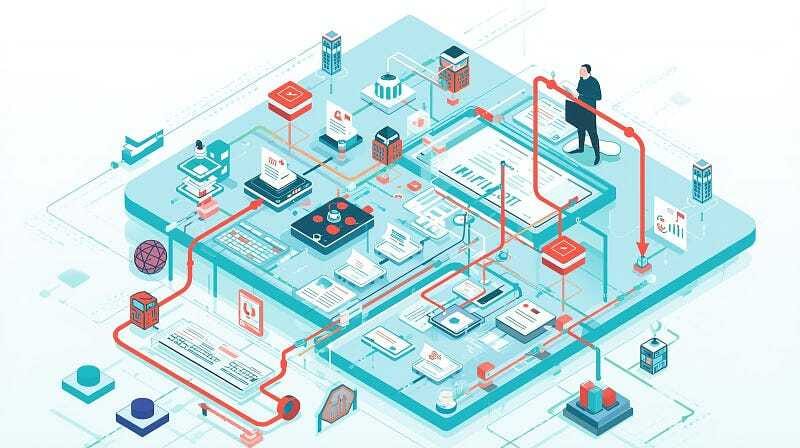 | Section 2.3: The Context Revolution…When Machines Learned to Remember Perhaps the most fundamental technical development rendering detailed prompting obsolete has been the rapid improvement in contextual awareness and memory systems. Early language models were effectively amnesiac, treating each interaction as isolated…read more here.   |
Section 3: By the numbers
The data paints a comprehensive picture of prompting's rapid decline as a valued skill between 2023 and 2025.
The numbers reveal a dramatic market correction where demand for prompt engineering expertise collapsed, where job postings fell by 73% and course enrollment dropped by 81%, while simultaneously the technology evolved to make such expertise unnecessary.
The evidence also shows that AI systems themselves absorbed the prompting function through intent inference layers (now in 94% of platforms), expanded context utilization (up 340%), and persistent memory systems (in 78% of platforms), which allowed users to spend 85% less time crafting prompts while achieving 43% higher satisfaction.
Meanwhile, the actual work shifted toward greater complexity, with enterprise deployments now involving over seven interconnected AI tasks rather than single interactions, and the labor market responded by placing a 64% salary premium on systems thinking skills rather than prompting ability.
Essentially, the technology automated away the need for prompting expertise at the exact moment when the real value moved upstream to architectural and strategic capabilities, creating a complete inversion where what seemed like the essential AI skill in 2023 became nearly worthless by 2026, and even more as vestigial skill as we get into late 2026 and 2027.
Topic | Statistic | Source |
Prompt Engineering Job Postings Decline | Job listings mentioning "prompt engineering" as a required skill decreased by 73% between Q2 2024 and Q1 2025 | |
Interface-Mediated AI Interactions | 89% of AI interactions in enterprise settings now occur through specialized interfaces rather than direct prompting | |
Time Spent on Prompt Crafting | Average time users spend crafting prompts decreased from 3.2 minutes to 47 seconds between 2023 and 2025 | |
Context Window Utilization | Modern AI systems utilize 340% more conversation context automatically compared to systems from 2023 | |
Prompt Engineering Course Enrollment | Enrollment in prompt engineering courses dropped 81% year-over-year in 2025 | |
AI Systems with Intent Inference | 94% of commercial AI platforms now include intent inference layers that modify user prompts automatically | |
Enterprise AI Workflow Complexity | Average enterprise AI deployment now involves 7.3 interconnected AI tasks, up from 1.4 in 2023 | |
User Satisfaction with Natural Language | User satisfaction scores for AI interactions increased 43% when interfaces handled prompt optimization automatically | |
AI Memory System Adoption | 78% of AI platforms deployed in late 2025 include persistent memory and user modeling capabilities | |
Skills Premium for Systems Thinking | Professionals with documented systems thinking and AI orchestration skills command 64% salary premiums over those with only prompting expertise |
Section 4: Section IV…The Road Ahead to Late 2026 and Beyond

As we look toward the remainder of 2026 and into 2027, several emerging patterns suggest how the post-prompt landscape will continue to evolve. The trajectory points toward an environment where human-AI interaction becomes increasingly implicit, context-aware, and architecturally complex.
Understanding these trends helps us prepare for a world where the very concept of "prompting" will seem as quaint as describing modern smartphone use as "tapping commands into a touch interface”…read more here.
Final Thoughts:
The post-prompt era arrived through the quiet accumulation of interface improvements, contextual awareness, and architectural sophistication.
By February 2026, knowing how to craft an effective prompt has become roughly as career-relevant as knowing how to operate a card catalog, thereby representing a skill that was genuinely important during a specific technological moment but that became obsolete once better systems emerged. And this trend will only continue in more earnest.
The interfaces, therefore, learned to translate intent, the models learned to infer context, and the real competitive advantage shifted from communication precision to strategic thinking.
As we move forward, the winners are those who can envision what to build with AI, recognize patterns across domains, design systems that compound capabilities, and ask questions that matter (in the context that our voice as humans is still highly valuable and will remain so).
The conversation continues, but the words (or prompting) matter less than the wisdom behind them and what humans end up doing with the outputs.
Other resources:
2) Join our Community to access support from peers, a message board, and some great VIP content like our agentAcademy, weekly office hours, etc.
3) Join our weekly webinar series, "The Agentic Future with Devin Kearns" every Friday from noon-1 PM ET (11 AM-noon CT).
4) Follow us on LinkedIn: Ross Green, CAiS, Devin Kearns
5) Want to learn more about how we work (e.g., build-with-you vs. build-for-you; Prebuilt SuperAgents vs, Customized Agents; etc)? Click here to schedule a meeting with us.
6) Have a friend who wants to sign-up for our Newsletter? Click here.
7) Check out Ross Green's Medium Channel
Reply